Material Note — Stone Finishing
Stand in a stone yard with two identical white marble tiles side by side — one glossy, one matte — and the choice suddenly feels bigger than a surface preference. The finish governs how the stone catches light, how it answers a fallen lime, and whether the shower floor turns into a hazard.
In practice, the difference is simple. Polished marble is ground with progressively finer abrasives until its surface becomes reflective, almost glassy. Honed marble stops earlier in the same sequence, leaving a smooth, flat face with a soft matte appearance. Nothing is painted or coated on: the finish is entirely a product of how far the marble's own crystals were refined. From that single fact, almost every practical difference in this article follows.
The finish is not a layer on the stone. It is the stone deciding how it will meet light, water, and daily life.
Every marble tile begins as a slab cut from a block. To create a finish, fabricators pass the slab under rotating diamond abrasives in a sequence of progressively finer grits. Honing typically stops in the 400-to-600 grit range: the surface becomes uniformly smooth, but the fine scratches left behind scatter light rather than reflect it. That scattering creates the matte look.
Polishing carries the sequence much further, using grits fine enough to burnish the calcite crystals until the surface reflects light as one continuous gloss. If you want the factory breakdown, the standard process used to make polished marble floor tiles is worth reading. The same principle applies to wall tiles, mosaics, and slabs.
This also explains the deeper technical difference: a polished face closes off much of the stone's natural micro-porosity, while a honed face remains slightly more open. Water, oil, and sealers interact differently with the two surfaces, which is why the differences go far beyond looks.
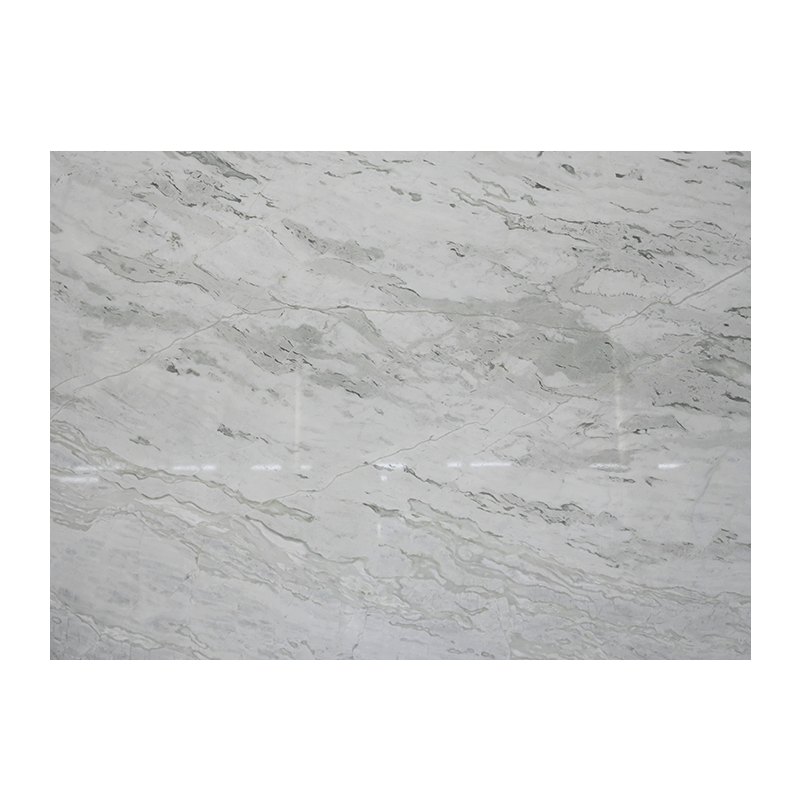
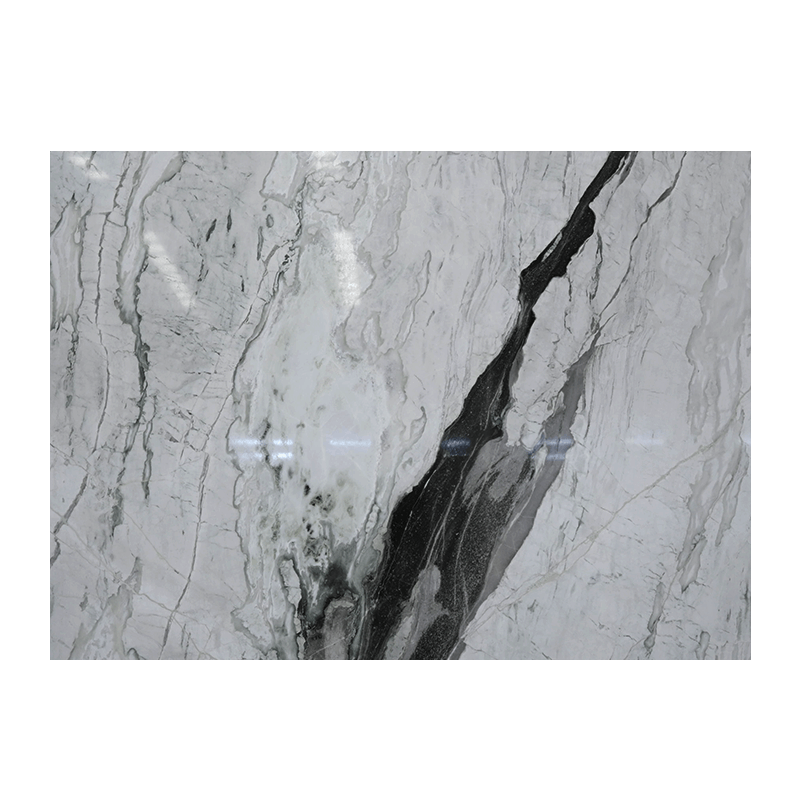
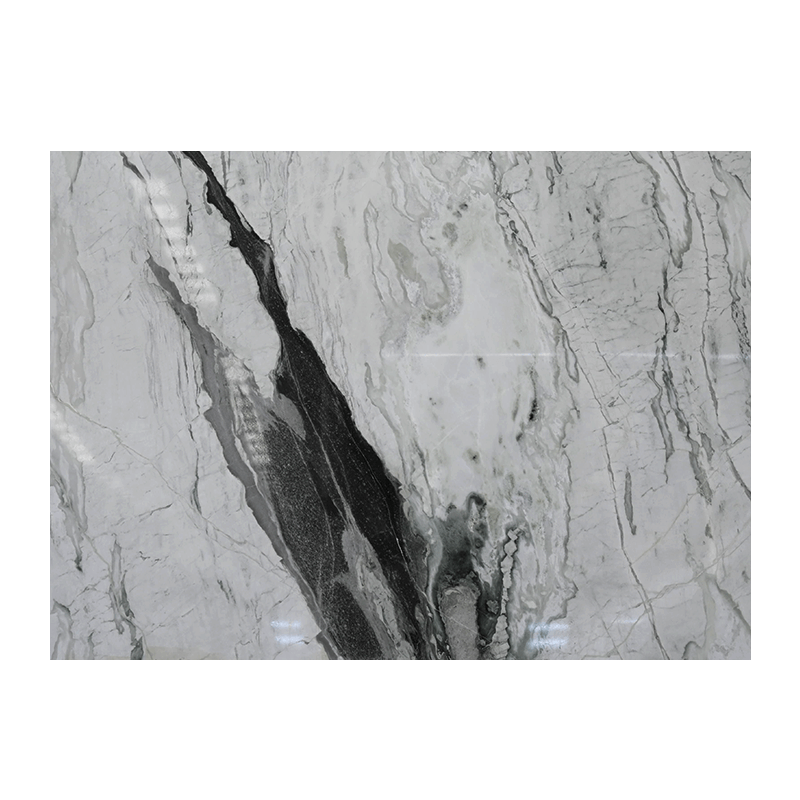
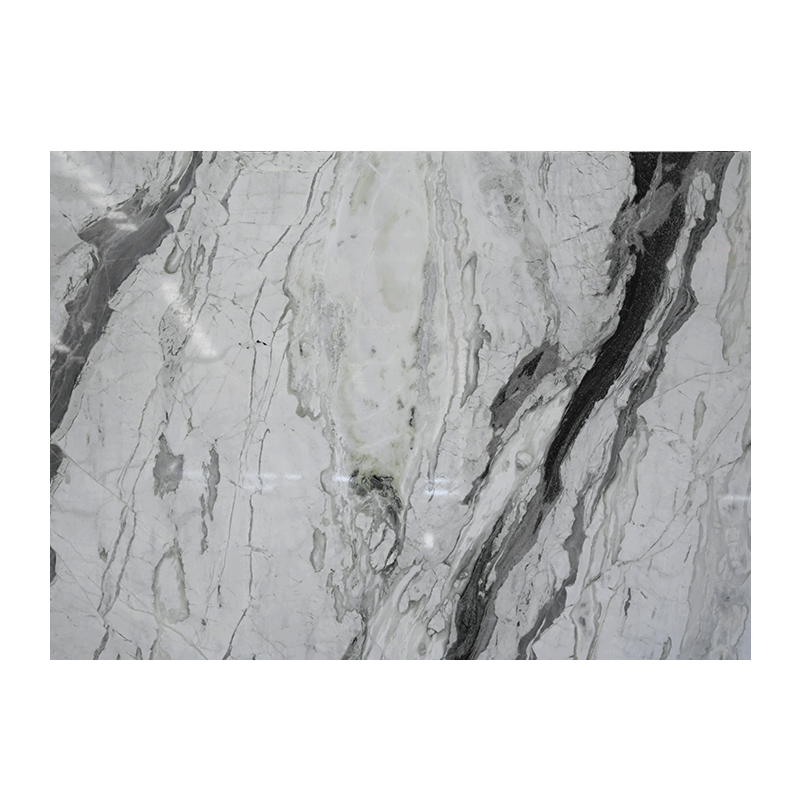
Polished marble stops conversations. Its reflective surface deepens the color, sharpens veining, and gives lighter stones a luminous, liquid quality. Classic white marble is usually specified polished precisely because the gloss magnifies the crystalline depth of the material. Even in muted tones, polish adds formality and a sense of occasion.
That visual reward comes with visibility risk. Because a polished surface reflects like a mirror, anything that interrupts the reflection becomes obvious. A drop of lemon juice leaves an etch mark. A grain of sand leaves a scratch. Soap film by the sink looks like a defect. In dry, formal settings — a fireplace wall, a guest powder room, a lightly used dining floor — polished marble performs flawlessly.
In wet or heavily used zones, however, it performs poorly. Slip resistance is low, and a wet polished floor in a kitchen or bathroom is a genuine hazard. If you love the gloss, reserve it for walls and vertical surfaces where water rarely reaches.
Honed marble reads as quiet luxury. The matte surface softens the color and gives the tile a texture closer to natural stone — smooth to the touch, dry to the skin, with no gloss. Designers describe it as calmer, and it is.
More importantly, honing is the great concealer. Acidic liquids — lemon, vinegar, tomato — still react with the calcium carbonate in the marble, but the resulting mark scatters across the matte face instead of interrupting a reflection, so you have to look twice to find it. Scratches behave the same way. In a busy kitchen, this one property removes a surprising amount of stress.
Honing also wins on traction. The micro-texture behind the matte look creates friction, making honed floors and mosaics noticeably less slippery when wet. That is why bathrooms, shower pans, and entryways are the traditional home for honed marble. Small-format honed mosaics add extra grout lines and surface texture, which is why they are among the safest natural-stone choices for shower floors.
The trade-off is absorbency. A honed surface is slightly more porous than a polished one, so spills left sitting — oil, red wine, strong tea — can penetrate deeper if the sealer has worn out. Sealing becomes a scheduled ritual rather than an occasional extra.
If you only keep one reference, keep this table. It isolates the factors that actually change when you switch finishes.
| Property | Polished Marble Tile | Honed Marble Tile |
|---|---|---|
| Surface look | High-gloss, mirror-like | Matte, satin-soft |
| Color and veining | Enriched and more pronounced | Softer, slightly muted |
| Feel | Smooth, cool, glassy | Smooth but dry, tactile |
| Slip resistance | Lower; slippery when wet | Higher; better wet traction |
| Etch marks from acid | Highly visible | Blend into the surface |
| Scratches | Clearly visible | Hard to detect |
| Stain absorption | Lower porosity | Slightly higher; seal well |
| Care tolerance | Requires immediate wiping | Forgiving in daily use |
| Best locations | Feature walls, formal rooms | Floors, showers, kitchens |
Map your planned installation against these rows, and the answer usually reveals itself before you open a supplier catalog.
Finish selection is room-specific. A material that is perfect for a fireplace can be dangerous on a floor, and a stone that is ideal for a shower wall may frustrate you every morning on the counter.
For any horizontal surface in a bathroom, honed is the practical answer. The shower floor in particular should never be polished: wet glossy marble is an accident waiting to happen. Walls are another story — some owners insist on polished there because nothing else shows off the stone's character in bright bathroom light. The common compromise is a honed floor with a polished wall: safest where your foot lands, glossiest at eye level.
Backsplashes can take either finish because they rarely see standing water. Counters are different. If you cook seriously — lemons, tomato paste, vinegar, olive oil — polished marble will document every encounter. Honed marble will live with you, absorbing small incidents into its matte texture. Buyers who still want the polished drama should know they are committing to careful daily attention.
For continuous flooring, honed is the more rational choice. It hides dust between vacuum passes, tolerates dropped objects, and feels safer under bare feet. Polished floors look magnificent in photographs but behave like a skating rink in wet socks. If you love the look, use polished as a foyer statement, a border, or a feature strip rather than the main surface.
Where water does not reach, polished has no rival. A fireplace surround, a formal feature wall, a vanity backsplash — these are places where the reflective depth of polished marble turns a room into a deliberate composition.
Two marble failures are constantly confused. Etching is a chemical reaction between acid and the calcium carbonate in the stone — the dull ring a lemon leaves behind. Staining is liquid penetration — the blotch red wine leaves behind. The distinction matters because the finish changes the former but not the latter, which is why a polished tile can look damaged while a honed tile in the same room looks untouched.
For both finishes, sealing is non-negotiable. Plan to reapply a penetrating sealer every 12 to 24 months — more often in kitchens and bathrooms. A sealed surface is the only real defense against oily stains.
Never let acidic cleaners sit on polished marble. Vinegar, citrus sprays, and descalers can dull a glossy surface in seconds, and the damage is costly to reverse.
Treat any large polished marble expanse around a pool, bathtub, or entrance as slippery until tested. In wet zones, honed is the safer specification.
Daily upkeep is simple: warm water and a pH-neutral cleaner outperform every specialty product aisle. Frequent wiping around the counter perimeter prevents most of the problems owners blame on the stone.
If you turn the decision into logic, the sequence is short.
The hybrid approach — honed where you step, polished where you look — gives you safety and spectacle in one installation. Designers use it far more than the single-finish rules suggest.
When you are ready to source, working with a specialized marble supplier that offers both finishes across the same natural stone makes execution simpler. Reviewing a supplier's product range before falling in love with a single photograph is the surest way to ensure the finish you want is attached to a stone you will actually receive.
For most homes, honed is the honest answer: safer, more forgiving, easier to live with. For a smaller set of rooms, polished is irreplaceable, because nothing creates the high-drama reflective moment like a glossy marble wall in an entry hall or over a fireplace. Neither finish is objectively superior. Define the room first, the traffic second, and the shine third — the marble will follow correctly from there.


Factory Address: NO.8,WEST BINHAI ROAD,LAOBAGANG(JIAOXIE TOWN),BINHAI NEW AREA,HAIAN COUNTY,NANTONG,JIANGSU,CHINA


+86-15221350573

+86-571-86632298
 English
 Español
 русский
 عربى
عربى