English
 Español
 русский
 عربى
عربىMaterials & Craftsmanship
Marble Mosaic Tile vs. Quartz Mosaic Tile: The Truth About Weight and Installation
A closer look at why natural stone demands more from your installer — and what that means for your floor, your budget, and your patience.
The Direct Answer
Yes — marble mosaic tile is heavier and more difficult to install than quartz mosaic tile. Natural marble carries a denser, less uniform structure than engineered quartz, which means it demands a stronger substrate, more deliberate cutting, and a more experienced hand to avoid cracking, chipping, or uneven grout lines. Quartz mosaic tile, being an engineered material with a consistent resin-to-stone ratio, is lighter per square foot, cuts more predictably, and typically installs faster with far fewer callbacks for repair.
That said, the gap between them is not so large that it should automatically rule marble out of most residential or light commercial projects. It simply means the project needs to be planned around the right subfloor, the right adhesive, and a labor budget that reflects reality rather than assumption.
"Weight is the quiet variable most homeowners forget to ask about — until the subfloor tells them the truth."
Weight, By the Numbers
Weight matters most when tile is going onto an upper floor, a plywood subfloor, or a wall where load limits are a genuine concern. On average, marble mosaic tile weighs between 3.2 and 3.6 pounds per square foot at a standard 3/8-inch thickness, while quartz mosaic tile in the same thickness typically weighs between 2.4 and 2.8 pounds per square foot. That difference — roughly 25 to 30 percent — adds up quickly across a full kitchen floor or a wraparound shower surround.
| Material | Approx. Weight (lb/sq ft) | Density Consistency | Typical Cutting Method |
|---|---|---|---|
| Marble Mosaic Tile | 3.2 – 3.6 | Variable (natural veining) | Wet saw, diamond blade |
| Quartz Mosaic Tile | 2.4 – 2.8 | Uniform (engineered) | Wet saw, standard blade |
This is one reason experienced installers recommend confirming subfloor load capacity before ordering marble mosaic floor tile for a second-story bathroom or kitchen — particularly in older homes with lighter-gauge joists.
Why Marble Resists the Blade
Marble is a natural stone formed from recrystallized limestone, and its mineral composition shifts from slab to slab — sometimes even within a single sheet. Veining, soft calcite pockets, and micro-fractures are common, and any one of them can cause a tile to chip or crack under the pressure of a wet saw blade. Installers typically slow the blade and switch to finer diamond blades when cutting marble to avoid ragged edges, a precaution that noticeably slows the job compared to quartz.
Quartz mosaic tile, by contrast, is manufactured from crushed quartz bound with resin under controlled pressure, giving it a consistent hardness rating across every single piece. That predictability lets installers cut multiple pieces at the same blade speed without pausing to inspect for weak spots — shortening labor time considerably on large-format installations.
Common Cutting Challenges With Marble Mosaic Tile
- Veining can create weak points that split unevenly under blade pressure
- Polished finishes are prone to chipping at cut edges without a diamond-tipped blade
- Color variation between pieces requires manual sorting before installation, adding time
- Thin mosaic chips, often 3/8 inch, are more fragile than full-size marble slabs
Substrate and Structural Requirements
Because of its added weight and sensitivity to movement, marble mosaic tile demands a more rigid substrate than quartz. For marble mosaic floor tile specifically, installers often favor cement backer board or an uncoupling membrane rather than installing directly over plywood, since even minor subfloor movement can telegraph through as cracked grout lines or lippage between tiles.
Quartz tolerates minor substrate imperfections far better, largely because its manufactured consistency reduces the risk of stress fractures — one of the quieter advantages of engineered stone.
marble mosaic floor tile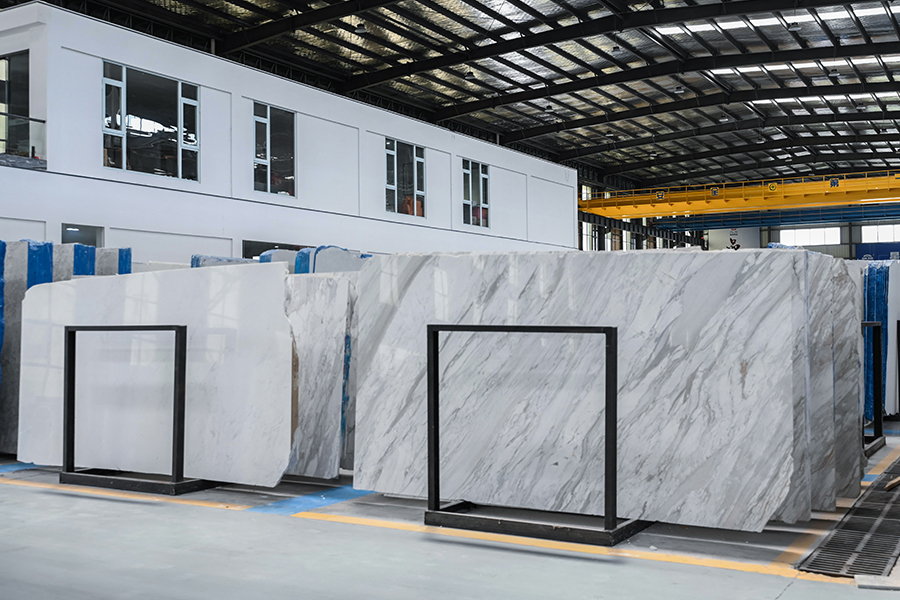
Labor Time and Installation Cost
The combination of extra weight, careful cutting, and stricter substrate prep translates directly into labor hours. Based on typical contractor estimates, installing marble mosaic tile takes roughly 20 to 35 percent longer per square foot than installing quartz mosaic tile of comparable size and pattern complexity.
| Factor | Marble Mosaic Tile | Quartz Mosaic Tile |
|---|---|---|
| Average install time (per 10 sq ft) | 1.5 – 2 hours | 1 – 1.5 hours |
| Recommended installer skill level | Experienced / specialist | General tile installer |
| Substrate prep needed | High (backer board / membrane) | Moderate |
This added labor time is the main reason installation quotes for marble mosaic tile often run higher than quartz, even when material cost per square foot is similar. Budget labor separately from material price when comparing the two.
Special Considerations for Marble Mosaic Floor Tile
Floor applications add another layer of complexity compared to walls. Marble mosaic floor tile experiences foot traffic, moisture exposure, and thermal expansion that wall tile simply does not, so installers typically use a flexible, polymer-modified thinset rather than a standard mortar to accommodate slight movement without cracking the stone.
Quartz mosaic floor installations generally use similar thinset products but require fewer expansion joints, because the engineered material expands and contracts more predictably than natural stone.
Installing Green Marble Mosaic Tile: What Changes
Color variety adds another practical wrinkle to marble installation. Green marble mosaic tile, prized for its striking veining and unique mineral tones, often comes from serpentine-based marble, which can be slightly softer and more prone to pitting than classic white or gray varieties. Installers working with green marble mosaic tile frequently recommend applying sealant before grouting, since the porous surface can absorb grout haze more readily than denser marble types.
Because green marble mosaic tile tends to have bolder, more visible veining, installers also spend extra time dry-laying sheets to balance the pattern across a floor or backsplash before setting anything permanently — a step far less relevant for quartz mosaic tile, where color and pattern are manufactured to be nearly identical piece to piece.
Long-Term Maintenance Tied to Installation Quality
Installation quality has a direct effect on long-term maintenance. A marble mosaic tile floor installed without proper sealing or sufficient expansion joints is more likely to develop cracked grout, staining, or lippage within the first few years. Sealing marble every 12 to 18 months is standard practice to protect against etching and moisture damage.
Quartz mosaic tile needs none of this. It's one of the clearest maintenance advantages quartz holds over marble, and it deserves equal weight alongside installation difficulty when deciding between the two.
Which Material Makes Sense for Your Project
Choosing between the two comes down to priorities. If a natural, one-of-a-kind look with authentic veining matters more than installation speed or ongoing sealing, marble mosaic tile remains the stronger aesthetic choice — its heavier weight and slower install are a reasonable tradeoff for the visual payoff. Green marble mosaic tile, in particular, is nearly impossible to replicate with any engineered alternative.
If a faster installation, lower labor cost, and zero sealing maintenance are the priority, quartz mosaic tile is the more practical option — particularly for busy kitchens, rental properties, or commercial spaces where downtime and upkeep need to stay minimal.
- Choose marble mosaic tile for a natural, high-end aesthetic and unique veining
- Choose quartz mosaic tile for faster installation and lower long-term maintenance
- Confirm subfloor load capacity before ordering marble for upper-level installations
- Budget extra labor hours when working with marble, especially green marble mosaic tile with bold veining